


What Is Tire Load Index?
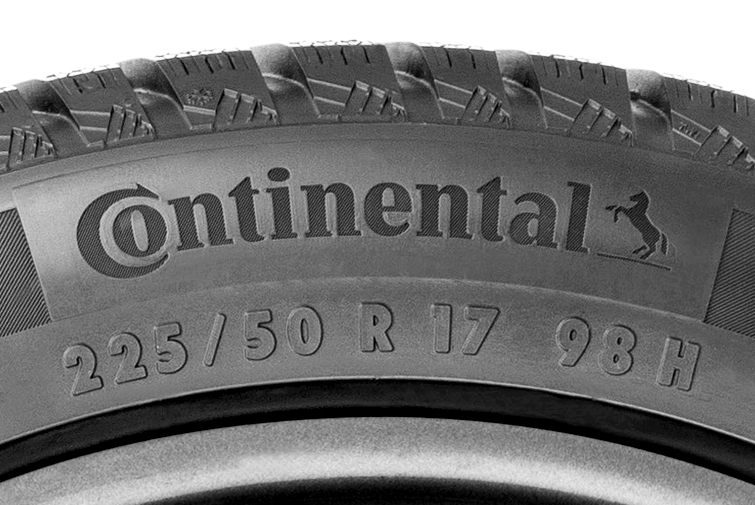
Tire load index is the numerical code on a tire’s sidewall that tells you the maximum weight one properly inflated tire can safely carry. It appears at the end of the tire size as part of the service description. In 225/50 R17 98H, the 98 is the load index and the H is the speed rating. A load index of 98 equals 1,653 lbs (750 kg) per tire, so a full set of four 98-rated tires can carry up to 6,612 lbs combined. The higher the number, the greater the load-carrying capacity. Service descriptions have been required on all passenger tires since 1991.
Tire Load Index Chart (Load Index to Pounds)
Use the chart below to convert any load index number to its maximum weight capacity per tire. Values are the industry-standard load index ratings.
| Load Index | Max Load (lbs) | Max Load (kg) |
|---|---|---|
| 75 | 852 | 387 |
| 80 | 992 | 450 |
| 85 | 1,135 | 515 |
| 90 | 1,323 | 600 |
| 91 | 1,356 | 615 |
| 92 | 1,389 | 630 |
| 93 | 1,433 | 650 |
| 94 | 1,477 | 670 |
| 95 | 1,521 | 690 |
| 96 | 1,565 | 710 |
| 97 | 1,609 | 730 |
| 98 | 1,653 | 750 |
| 99 | 1,709 | 775 |
| 100 | 1,764 | 800 |
| 101 | 1,819 | 825 |
| 102 | 1,874 | 850 |
| 103 | 1,929 | 875 |
| 104 | 1,984 | 900 |
| 105 | 2,039 | 925 |
| 106 | 2,094 | 950 |
| 107 | 2,149 | 975 |
| 108 | 2,205 | 1,000 |
| 109 | 2,271 | 1,030 |
| 110 | 2,337 | 1,060 |
| 111 | 2,403 | 1,090 |
| 112 | 2,469 | 1,120 |
| 113 | 2,535 | 1,150 |
| 114 | 2,601 | 1,180 |
| 115 | 2,679 | 1,215 |
| 116 | 2,756 | 1,250 |
| 117 | 2,833 | 1,285 |
| 118 | 2,910 | 1,320 |
| 119 | 2,998 | 1,360 |
| 120 | 3,086 | 1,400 |
| 121 | 3,197 | 1,450 |
| 122 | 3,307 | 1,500 |
| 123 | 3,417 | 1,550 |
| 124 | 3,527 | 1,600 |
| 125 | 3,638 | 1,650 |
How to Read a Tire Load Index
Find the two- or three-digit number immediately after the tire size (before the speed-rating letter), then match it to the chart above. Never fit a tire with a lower load index than the number specified on your vehicle’s door-jamb placard — doing so can overload the tire. For a deeper walkthrough, see our tire load index guide, or the detailed breakdowns for load index 107 and load index 111.
What Is Tire Speed Rating?
Tire speed rating is a letter on the sidewall that indicates the maximum speed a tire can safely sustain when correctly inflated and in good condition. Using our 225/50 R17 98H example, the H rating means the tire is rated for a top speed of 130 mph (210 km/h). A higher letter means a higher rated speed. Even when a tire is rated for high speeds, you should always drive within posted speed limits.
Tire Speed Rating Chart
| Speed Rating | Max Speed (mph) | Max Speed (km/h) |
|---|---|---|
| L | 75 | 120 |
| M | 81 | 130 |
| N | 87 | 140 |
| P | 93 | 150 |
| Q | 99 | 160 |
| R | 106 | 170 |
| S | 112 | 180 |
| T | 118 | 190 |
| U | 124 | 200 |
| H | 130 | 210 |
| V | 149 | 240 |
| W | 168 | 270 |
| Y | 186 | 300 |
For letter-by-letter detail, see tire speed rating explained and speed rating H explained.
Important
These ratings only apply to tires with no prior damage that are properly inflated. Actual load-carrying capacity and safe speed can change based on the tire’s tread depth, road conditions, driving habits, and weather. When replacing tires or wheels, always match or exceed the load index and speed rating listed on your vehicle’s door-jamb placard.
Frequently Asked Questions
What is tire load index?
Tire load index is a two- or three-digit number on the sidewall that indicates the maximum weight one properly inflated tire can safely carry. For example, a load index of 98 means each tire supports up to 1,653 lbs (750 kg).
How do you read a tire load index?
Locate the number right after the tire size and before the speed-rating letter (the 98 in 225/50 R17 98H), then match it to a load index chart to find the weight in pounds. Always meet or exceed the load index on your vehicle’s door-jamb placard.
What does the speed rating letter mean?
The speed rating letter marks the maximum speed a tire can safely sustain. For example, an H rating is good for 130 mph (210 km/h) and a V rating for 149 mph (240 km/h).
Where do I find the load index and speed rating on my tire?
Both appear at the end of the tire size on the sidewall as the service description — the digits are the load index and the trailing letter is the speed rating (e.g., 98H). Service descriptions have been required on passenger tires since 1991.
Have a set of OEM wheels you no longer need? Sell your OEM wheels and rims to Santa Ana Wheel — one of the longest-running OEM wheel businesses in the country since 1958.
Footer

1420 N. Burton Place
Anaheim CA 92806
Phone: 714.239.1122
Text: 949.478.2033
Email:[email protected]
www.p65Warning.ca.gov